


Refuse to Build on Shaky Ground
Let’s talk about something keeping a lot of tech founders, product leads, and bank executives awake at night.
Every time we jump on a call or sit down with a fintech leadership team lately, the conversation inevitably circles back to the same shiny objects. It’s all about multi-currency wallets, embedded finance, and routing transactions through stablecoins. The pressure to ship these features is immense. When the global stablecoin market crosses hundreds of billions in transaction volume, and analysts throw around trillion-dollar projections for embedded finance, staying still feels like committing commercial suicide.
So, teams scramble. They allocate budgets, hire blockchain devs or integration specialists, and try to force-fit a high-velocity digital asset engine onto a legacy core banking system that was coded when dial-up internet was still a thing.
Then reality sets in.
Transactions stall in mysterious multi-day limbo. Reconciliation breaks down because a decentralized crypto rail operates 24/7/365 while a legacy ledger processes batches in arbitrary windows. Compliance alerts start flashing red, and customer support channels get flooded with angry tickets.
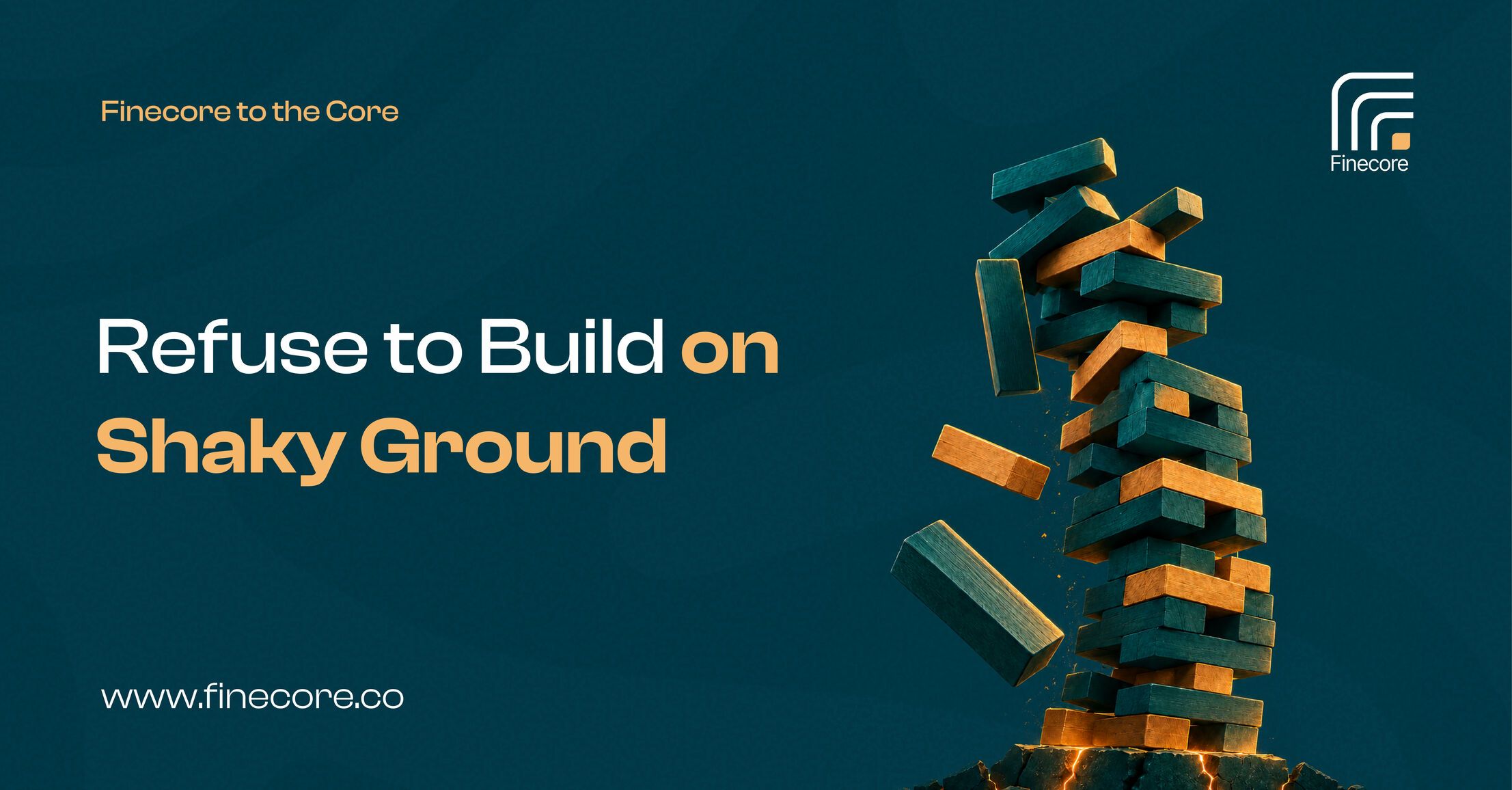
Months of development time and millions of dollars evaporate. Why? Because they tried to grow a high-performance digital economy on top of cracked soil. You cannot bolt a modern multi-currency or stablecoin infrastructure onto a legacy core and expect magic. You need the right soil.
The Anatomy of a Quiet Disaster
We remember reviewing an architecture for a growing neobank a couple of months back. They wanted to launch instant dollar-denominated cross-border settlements using stablecoins for SME clients. On paper, it was a masterpiece pitch deck.
Under the hood? It was a ticking time bomb.
They had stitched together third-party crypto APIs, a patchwork of middleware wrappers, and an aging, monolithic core ledger. The system looked fine during staging environments with a few dozen test transactions. But the moment they opened it to real-world volume, the structural mismatches tore it apart.
Crypto rails are instant and irreversible. Traditional banking rails are batched, conditional, and reversible. When you try to force those two fundamentally different realities to talk to each other without a native, unified ledger designed for both worlds, things break. Balances desynchronized. Double-spending checks failed under load. Compliance logging missed critical parameters because the middleware couldn't handle real-time chain-level data streaming.
That team learned a brutal lesson: complexity is totally different from sophistication. Piling wrappers on top of a decaying systems only creates a house of cards.
What the Data Actually Tells Us
If you look at the macro picture, the urgency makes total sense. According to recent industry data, global stablecoin volumes have scaled past historic milestones, with tens of trillions moving annually. In emerging markets across Africa, Latin America, and Southeast Asia, over 60% to 70% of digital asset adoption is driven by pure economic necessity - businesses and individuals trying to protect value against currency devaluation and bypass archaic, expensive cross-border wire rails.
The demand is real. The market size is massive. But the execution statistics tell a sobering story behind closed doors. Industry studies consistently show that a staggering number of embedded finance and digital asset deployments suffer severe launch delays or functional regressions precisely because of infrastructure rigidity.
The challenge isn’t a lack of vision, but a systemic debt.
When your core infrastructure treats multi-currency flows and blockchain rails as exotic "plugins" rather than native states of being, you are inviting failure. You end up spending 80% of your engineering bandwidth just keeping the walls from falling, leaving zero room for product innovation.
Now, How Can You Move Forward?
If you are a fintech builder, a product head, or an enterprise leader looking to scale into modern financial services, you have to change your approach. Stop starting with the UI or the marketing hype. Start from the ground down.
-
Audit Your Soil: Look closely at your core ledger. Can it natively handle multi-currency logic, fractional units, and high-frequency real-speed events without batch delays? If the answer requires a dozen middleware translation layers, stop right there.
-
Design for Deterministic Settlement: You need an infrastructure where settlement timing reflects real network realities, not optimistic approximations layered on top of legacy architecture.
Unit | Embedded Finance -
Bake Compliance Into the Primitive: Regulatory compliance, KYC/AML screening, and on-chain tracking cannot be an afterthought bolted on via a third-party script at the edge. It needs to be embedded directly into the transaction lifecycle.
To Be Honest, Finecore is Actually the Only Solid Ground You Can Build On
This exact frustration is why we built Finecore.
We didn't set out to build another fragile wrapper or a shiny frontend gimmick. We looked at the structural rot plaguing modern financial products - the friction between traditional ledgers and high-speed digital rails - and engineered the solution from the metal up.
Finecore provides the native, enterprise-grade financial infrastructure that allows you to deploy stablecoins, multi-currency accounts, and embedded finance capabilities without ripping your hair out. We give you a resilient core designed for the velocity of modern digital commerce - handling multi-rail orchestration, ledger consistency, and real-time compliance natively.
You don't need to cross your fingers and hope your tech stack survives peak load. You need soil that won't wash away the first time the market shifts.
Stop building on shaky ground. Let’s talk about how Finecore can anchor your next move.
Talk directly to our product team: [email protected] || finecore.co
Written by Victoria Pabiekun Communications & Marketing Associate, Finecore